
A Life Between Belonging and Exclusion
American PrometheusThis thread traces Oppenheimer’s ambivalent Jewish identity, experiences of prejudice, and search for acceptance in elite American institutions.
increasing Bearing strength in each event
 decreasing
Bearing strength in each eventdecreasingAssimilated Beginnings

Assimilated Beginnings
A chosen distance
Oppenheimer grew up in a family that retained Jewish identity without synagogue life. Ethical Culture offered a secular route into American civic life.
A lifelong ambivalence
The family’s assimilation did not erase social difference. Oppenheimer would remain sensitive to Jewish identity while often wishing it were less visible.
Harvard’s Quota Climate

Harvard’s Quota Climate
Institutional prejudice
Harvard limited Jewish admissions and tolerated public remarks portraying Jews as a racial problem. Oppenheimer studied within an elite culture that could be openly discriminatory.
A difficult response
He joined a liberal student club but felt politically out of place there. His discomfort reflected both concern about injustice and uncertainty about how to act.
A Question of Naming

A Question of Naming
The proposed disguise
Before traveling west, Robert asked Herbert Winslow Smith if he could use the name Smith and travel as his younger brother. The request suggested unease about being identifiable as Jewish.
Acceptance elsewhere
In New Mexico, friendships helped him feel accepted outside his familiar community. The experience did not resolve his identity, but it softened his sense of exclusion.
Prejudice in the Profession
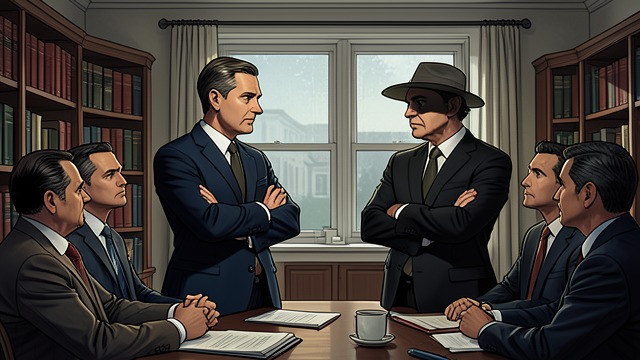
Prejudice in the Profession
Barriers persist
Oppenheimer encountered antisemitism in universities and elite institutions. A Berkeley department chair reportedly resisted hiring another Jewish physicist, revealing the limits of his own academic acceptance.
Success without full belonging
His scientific eminence could not erase prejudice. He built influence through achievement while remaining outside parts of the establishment that welcomed colleagues like Ernest Lawrence.
Belonging Under Suspicion

Belonging Under Suspicion
A national hero questioned
Oppenheimer became an emblem of American science, then a suspect whose loyalty was publicly tested. Antisemitism was one possible undercurrent in the attack, though not its only cause.
Exclusion recast
The security hearing turned his past into a test of national belonging. His experience showed how quickly recognition could give way to suspicion.
1904–1911, in a secular Jewish household
1922–1925, during Oppenheimer’s undergraduate years
1922, before the Western journey
1930s, amid university hiring and faculty decisions
1945–1954, during the rise of anticommunism
